Dr. Gymbro
←

#bench press

8 articles
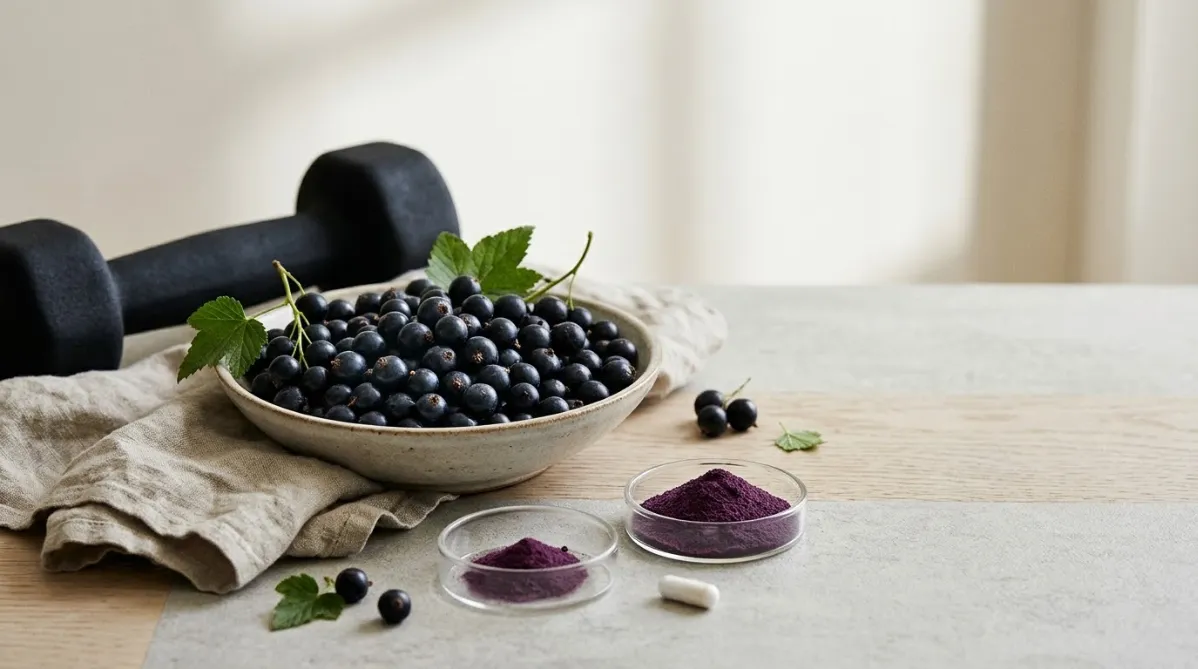
A wide, editorial-style still life photographed in soft natural window light on a pale oak or light grey concrete surface. In the center-left, a shallow ceramic bowl filled with plump, dusky blue-black blackcurrants, some with tiny glossy highlights and a few still attached to slender green stems with serrated leaves. Beside the bowl, a matte black dumbbell handle rests diagonally, partially in frame and slightly out of focus, suggesting strength training without a gym setting. In the foreground, two small minimalist glass dishes sit side by side: one holds a small pile of deep purple powder, the other a larger pile, a subtle visual nod to the low versus high dose. A few scattered berries add a natural touch. A folded linen cloth in muted oatmeal tone adds texture, and a single white capsule sits near the dishes for scale.

The background is a soft, creamy off-white wall with gentle shadow gradients from the window, leaving generous negative space on the right third of the frame for title overlay. The color palette is restrained and modern: deep indigo and violet from the berries, warm neutral beige, charcoal black, and touches of fresh leaf green. Shallow depth of field, crisp focus on the berries in the foreground, subtle film grain, and a calm, refined, contemporary magazine aesthetic like a wellness or sports science journal cover. Overhead angle tilted slightly to about 35 degrees, balanced composition, clean and uncluttered, with natural soft shadows and a premium, quietly athletic mood.
nutrition

Blackcurrant for Lifters: Why the Low Dose Beat the High Dose

BY DR. GYMBRO ·

A one-week blackcurrant supplement raised bench press 1RM in resistance-trained lifters, and the smaller 250 mg dose often matched or beat the 600 mg dose. The high dose boosted bench power by nearly 80 W against placebo, and the low dose improved Stroop cognitive scores. But the placebo also beat the no-capsule control on leg press, so those eye-catching gains need careful reading. With just 20 participants and a seven-day window, this is a promising signal rather than a proven strength aid. Here is what held up, what didn't, and who might want to try it.

A wide, editorial-style still life photographed in soft natural window light on a pale oak gym bench. In the foreground, a small rustic ceramic bowl in warm sand tones holds a mound of fine golden-beige ashwagandha root powder, with a few dried gnarled ashwagandha roots and a sprig of green leaves with tiny orange-red berries resting beside it. A wooden scoop dusted with powder lies at an angle. Just behind, a matte black barbell with a single chalk-dusted steel plate sits slightly out of focus, a light haze of white chalk hanging in the air and catching the sunlight.

On the left side, a neat stack of printed research papers with a sharp black pen and a few muted sage-green sticky tabs. One page shows a simple, abstract forest-plot-style line graph with small squares and horizontal lines, subtly out of focus, hinting at statistics without legible text. A pair of minimal round reading glasses rests on the pages. A small linen gym towel is folded near the edge of the bench.

The palette is restrained and modern: warm cream, soft sage green, muted terracotta, charcoal black, and brushed steel highlights. The background is a softly blurred minimalist studio space with a pale plaster wall and a long soft shadow cast by a window frame, giving a calm, contemplative mood. Shallow depth of field, crisp detail on the powder and roots, gentle film-like grain, and generous negative space on the right third of the frame for a headline overlay. The overall look is a clean, trendy health-and-science journal cover, thoughtful and skeptical rather than promotional, balancing the natural herbal element against the discipline of strength training.
nutrition

Ashwagandha for Lifters: Strength Boost or Statistical Mirage?

BY DR. GYMBRO ·

Ashwagandha is sold to lifters as a strength and size booster, and a new meta-analysis of resistance-training RCTs found bench and squat 1RM gains that look impressive on paper. But only three trials with 161 participants could be pooled. Both strength results lost significance under stricter HKSJ testing, and each leaned on a single influential trial. GRADE rated the evidence low to very low, and there was no dependable effect on body fat. Here is what the review actually shows, and who might still want to try it.
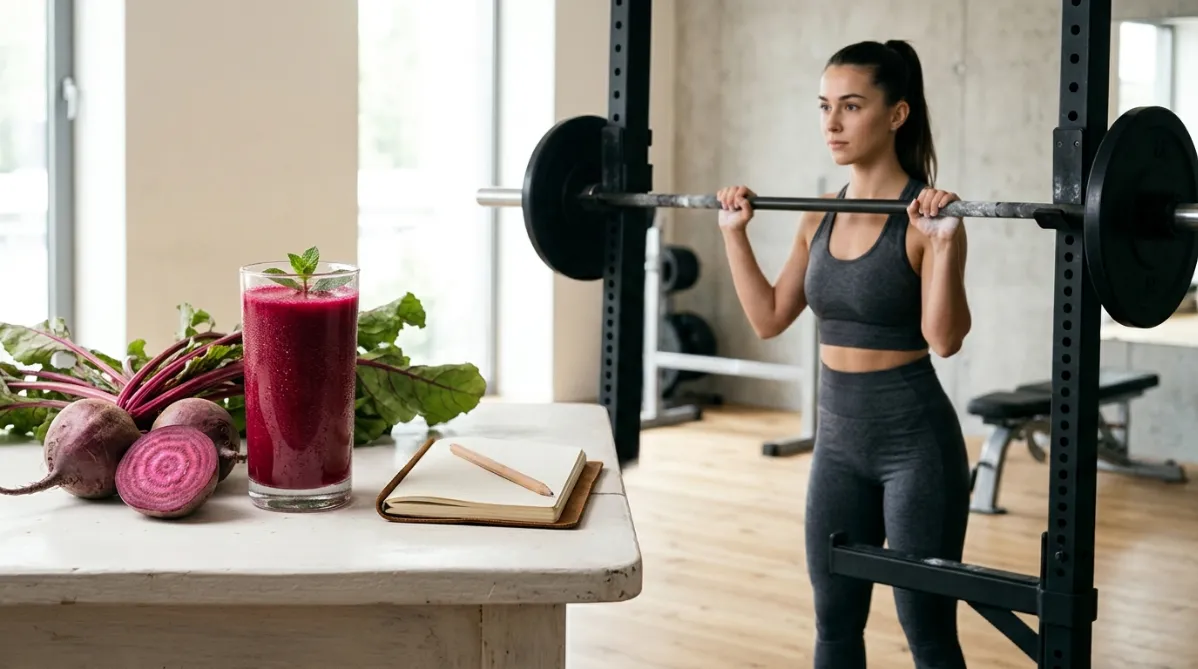
A wide, editorial-style photograph of a bright, modern gym corner softened by morning window light. In the foreground, a rustic matte-white ceramic table holds a tall clear glass of deep magenta beetroot juice, beads of condensation on the glass, a few fresh whole beetroots with leafy crimson-veined stems beside it, and one beetroot sliced in half to reveal its vivid concentric purple-pink rings. Next to the glass sits a small, neat notebook with a pencil, suggesting a research note, with no legible text. Behind the table, slightly out of focus, a young woman lifter with a tidy ponytail and a fitted charcoal training set stands at a barbell resting on a squat rack, chalk-dusted hands gripping the bar, calm and focused expression. A loaded bench with a bar is visible further back, with matte black plates and a light wooden floor. The palette is restrained and trendy: warm off-white, soft concrete gray, muted sage green accents from the beet leaves, and a bold beetroot magenta as the focal color. Shallow depth of field with a creamy bokeh background, natural side lighting casting long gentle shadows, subtle film grain. Composition follows the rule of thirds, with the juice and beets on the left third and the lifter on the right, leaving clean negative space in the upper area for a headline overlay. Mood is thoughtful, clean, and slightly skeptical, like a contemporary health and science journal cover. Realistic photography style, high-end magazine look, no text, no logos, no futuristic elements.
nutrition

Beetroot Juice Failed Women Lifters—and Even Slowed the Bench

BY DR. GYMBRO ·

Beetroot juice has a reputation as a natural performance booster, but a new crossover trial in 18 resistance-trained women found no squat benefit at all. Even stranger, bench press power and velocity dipped slightly at one load (60% 1RM) after a ~6.7 mmol nitrate dose taken 2.5 hours before training. The drop was only about 5 W and 0.02 m/s, with borderline P values, so it's far from a verdict. Here's what the study tested, what it can't tell us, and who might still want to experiment with nitrate.
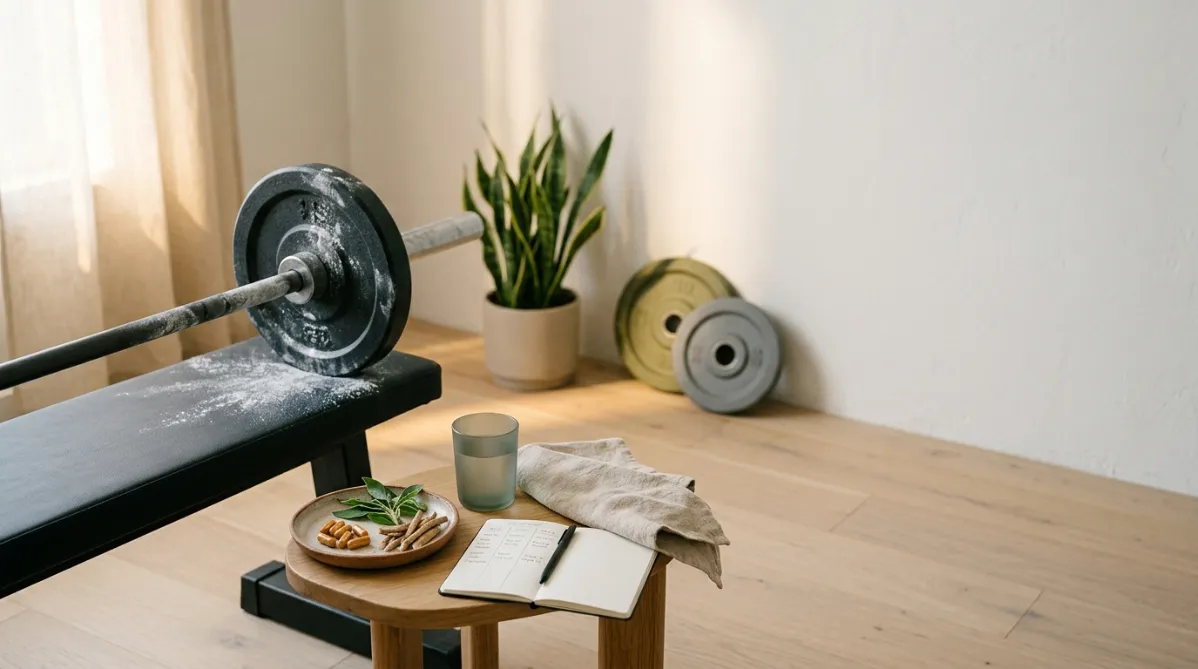
A wide landscape editorial photograph of a modern, softly lit home gym corner with pale oak flooring and a matte white wall. In the foreground, a chalk-dusted barbell rests across a minimalist bench, shot at a low angle with shallow depth of field. On a small natural-wood side table beside it sits a ceramic dish holding a few amber-colored capsules, a handful of dried ashwagandha roots, and a few green leaves. A matte glass of water and a folded linen towel sit nearby. A slim open notebook with a pen lies next to the dish, suggesting careful reading and note-taking, with blurred handwritten columns that suggest comparison, but no legible text.

Soft morning window light enters from the left, casting long, gentle shadows and a warm golden glow across the scene. The palette is muted and earthy: sage green, warm sand, cream, charcoal gray, and touches of terracotta. A single potted green plant in the background adds texture. Two weight plates in stacked, muted tones lean against the wall, slightly out of focus.

The composition follows the rule of thirds, with the barbell and supplement dish on the left and generous negative space on the right for headline overlay. The mood is calm, trustworthy, and analytical, like a contemporary health and science magazine cover. Crisp detail, natural film-like grain, subtle color grading, and a clean, uncluttered, premium lifestyle feel. No people, no text, no logos, no futuristic elements.
supplements

Ashwagandha SR Doubled Bench Gains in 90 Days—Read the Fine Print

BY DR. GYMBRO ·

A once-daily sustained-release ashwagandha capsule roughly doubled bench press gains versus placebo in a 90-day randomized trial. Participants taking 300 mg of AshwaSR added 15.31 kg to their 1-RM, compared with 7.33 kg on placebo. But the testosterone rise in men did not beat placebo, the study was funded by the product's developer, and the VO2max numbers look unusually large. Here's what the trial actually shows, the dose used, who it may suit, and who should skip it.
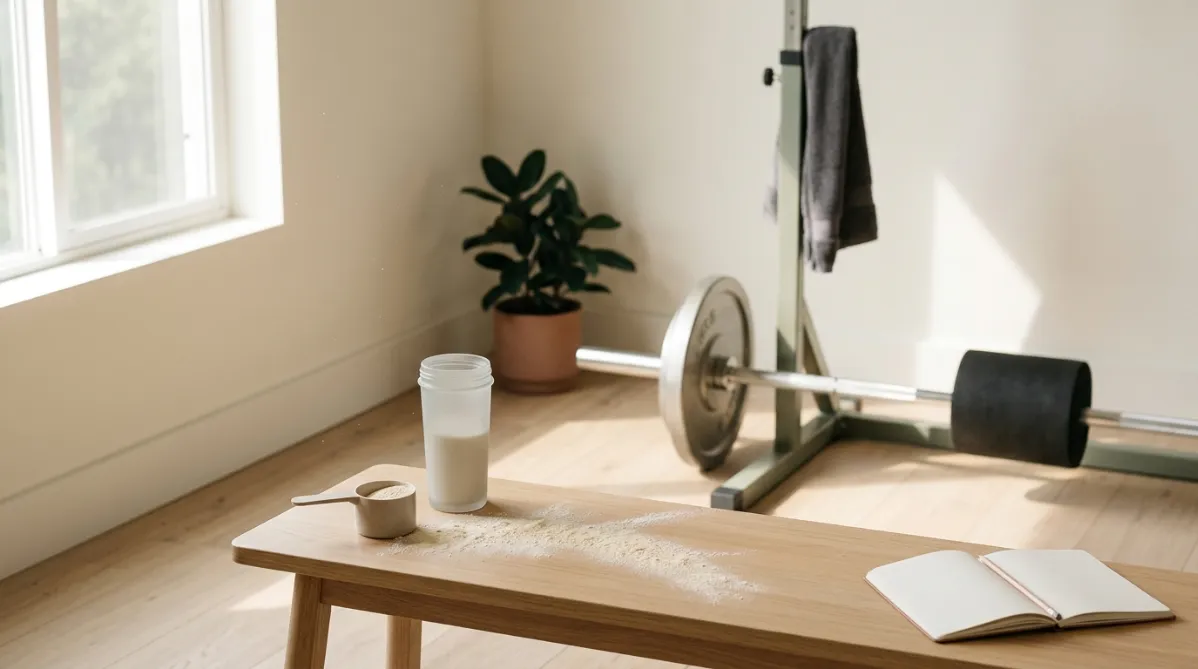
A wide, softly lit editorial photograph of a minimalist home gym corner with pale oak flooring and a warm off-white wall. In the foreground on a light wooden bench sits a matte ceramic scoop resting beside a simple frosted glass shaker bottle, with a delicate dusting of fine cream-colored protein powder spilled across the wood in a natural, casual arc. In the soft-focus midground, a loaded barbell rests on a squat rack with brushed steel plates, and a neatly folded charcoal towel hangs over the rack's upright. To the right, a small open notebook with a pencil lies on the bench, suggesting tracked training logs, with no legible text. Morning sunlight streams diagonally through a large window on the left, casting long gentle shadows and a warm golden glow across the scene, with subtle dust motes floating in the light. The color palette is muted and modern: sage green, warm sand, soft terracotta, and cream, with a single accent of deep forest green from a potted plant in the background corner. Shallow depth of field, crisp detail on the powder and scoop, creamy bokeh on the barbell. Shot as if with a 50mm lens at f/2, natural film-like grain, clean negative space on the upper right for headline overlay. The mood is calm, thoughtful, and science-minded, with a contemporary wellness magazine aesthetic, realistic and tactile, with no people, no logos, and no text.
nutrition

Does Protein Powder Add Strength? 23 Trials Reveal the Catch

BY DR. GYMBRO ·

Does adding protein powder to your training actually make you stronger? A 2026 meta-analysis of 23 randomized trials and 611 young adults found an average edge of 7.4 kg on the squat and 2.6 kg on the bench press. The squat benefit clustered in programs of 12 weeks or less and in trials where protein was taken around workouts and before sleep. But the timing signal was only borderline, no optimal dose was established, and the authors stress the benefit is conditional, not universal. Here is what the data support and what they don't.

A wide, editorial-style still life photographed on a pale warm-gray concrete surface in soft, diffused morning window light. On the left side, a tall clear glass filled with deep magenta-crimson beetroot juice sits beside two halved raw beetroots, their concentric rings of vivid fuchsia and purple clearly visible, with a few small green-and-red-veined leaves draped casually nearby. On the right side, a matching clear glass of cloudy white creatine solution rests next to a small matte ceramic bowl heaped with fine white powder and a minimal wooden scoop, a light dusting of powder scattered across the surface. In the center, between the two sides, a simple matte black barbell grip and a single chalk-dusted weight plate edge rise into the frame at a low angle, hinting at lifting without showing a person. The composition is split in a balanced, symmetrical way, with a subtle vertical shadow line dividing the saturated magenta tones on the left from cool, neutral whites and creams on the right. The background is softly blurred with a muted sage-green and oatmeal-toned wall, with plenty of negative space at the top for a headline overlay. Shallow depth of field, crisp focus on the glasses' condensation droplets and the textured beetroot flesh. The color palette is limited and refined: magenta, cream, charcoal, and soft sage. The mood is clean, modern, and health-journal chic, like a contemporary wellness magazine cover, with natural shadows, a tactile matte finish, and subtle film-like grain. No text, no logos, no futuristic elements.
nutrition

Beetroot Juice vs Creatine: Who Wins for Lifting in 72 Hours?

BY DR. GYMBRO ·

A new randomized crossover trial pitted beetroot juice against creatine over about 72 hours of supplementation in novice lifters. Creatine was the one credited with more bench press reps at 80% 1RM, while beetroot juice led on bar velocity, muscle oxygenation, peak heart rate and HRV recovery. The abstract doesn't report doses or timing, so we flag what's missing. Here's the full scorecard and who might choose which supplement.
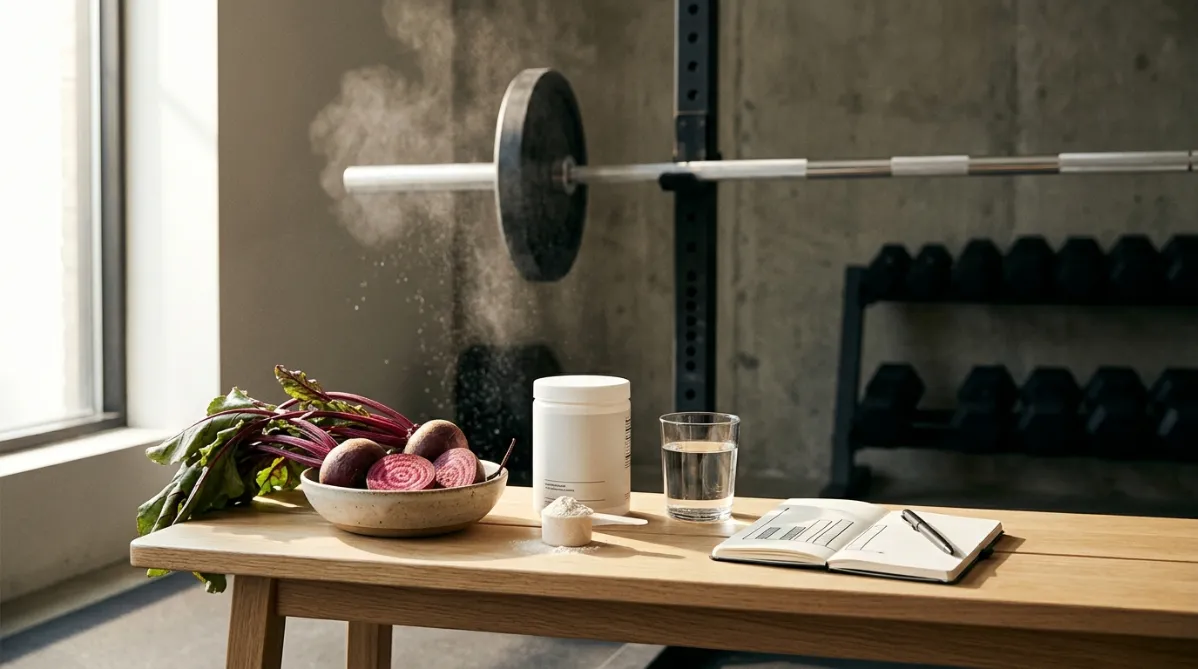
A sun-lit editorial still life on a pale oak gym bench: a loaded barbell rests on a rack just above it, chalk dust drifting in the air. In the foreground sits a small ceramic bowl of roasted beets, some sliced to show their deep magenta rings, with a few whole beets still wearing their leafy burgundy stems. Next to the bowl is a matte white supplement tub with a minimal label, a wooden scoop of fine white powder, and a clear glass of water catching soft highlights. A slim notebook lies open beside them with a simple hand-drawn bar graph and a pen, suggesting data and analysis without any readable text. Behind the bench, a softly blurred minimalist training space: raw concrete wall, tall window with warm morning light, a rack of black dumbbells fading into bokeh. The palette is earthy and modern: beet magenta, warm cream, charcoal, brushed steel, and touches of sage green from the beet leaves. Soft directional light from the left creates long gentle shadows and a slight film-grain texture. Shallow depth of field keeps the beets and powder tack sharp. The composition is wide and balanced, with negative space on the right for headline overlay. The overall feel is a clean, contemporary health and fitness journal photograph, warm and tactile, with an understated scientific tone.
nutrition

Betaine Raised Bench Throw Power ~16% in 14 Days

BY DR. GYMBRO ·

Two weeks of betaine, a compound found in beets and sold as TMG, was linked to roughly 16% higher bench throw power on day one of a hard testing block in resistance-trained men. A randomized, double-blind crossover trial also found higher isometric bench press force, with smaller improvements in vertical jump power and isometric squat force. But reps and jump squat power did not budge, and the study included just 12 men. Here's what the data show, the dose used, and what lifters should and shouldn't take from it.
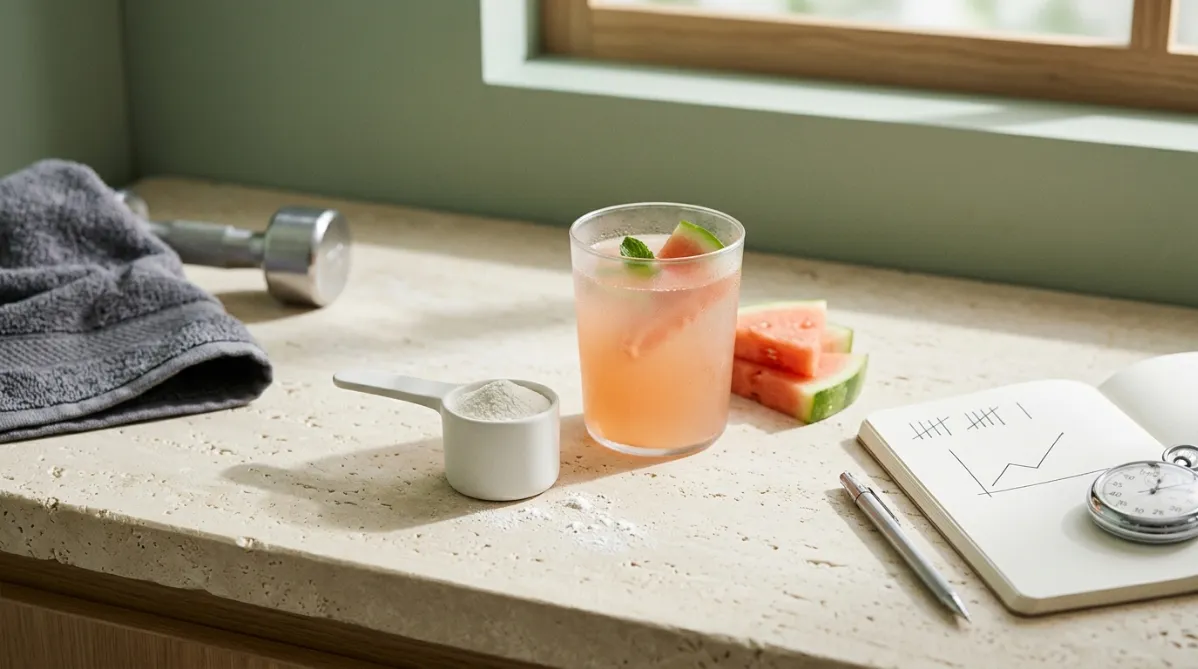
A wide, editorial-style still life photographed on a pale limestone countertop in soft morning window light. At the center sits a matte white scoop of fine white powder resting beside a frosted glass tumbler of cloudy, pale pink-orange water, with a few watermelon slices and a halved wedge showing glossy coral flesh and thin green rind, a nod to citrulline's natural source. To the left, a neatly folded charcoal gym towel and a brushed steel dumbbell rest at the edge of the frame, slightly out of focus. To the right, a minimalist open notebook with a few hand-drawn tally marks and a simple line graph sketched in black ink rises toward the right edge, next to a slim mechanical pencil and a small analog stopwatch with a clean white face. A few loose grains of powder are scattered across the stone, catching the light. Soft diagonal shadows fall across the surface from a nearby window, and a gentle sage-green wall in the background adds calm contrast. The palette is warm cream, watermelon coral, sage green, and soft graphite gray, with plenty of negative space on the upper left for headline overlay. Shallow depth of field, crisp focus on the powder scoop and watermelon, subtle film grain, natural tones, and a clean, modern wellness-journal aesthetic. Shot at eye level with a slight downward angle, like a contemporary health and science magazine cover. No text, no logos, no people.
nutrition

8 g Citrulline Malate = 53% More Reps and 40% Less Soreness? What the Study Shows

BY DR. GYMBRO ·

A 2010 crossover trial found that 8 g of citrulline malate was linked to about 53% more bench press reps in the final evaluated set and roughly 40% less soreness at 24 and 48 hours. The catch is that the biggest rep gain showed up late in the session, once fatigue had built up. Here is what the study actually tested, how to apply the dose and timing sensibly, who stands to benefit, and why the 14.63% rate of stomach discomfort and the study's limits deserve attention.

This page is available in